The Waiting Room Revolution: How Canada's Healthcare Crisis Is Quietly Dismantling Conservative Voter Loyalty
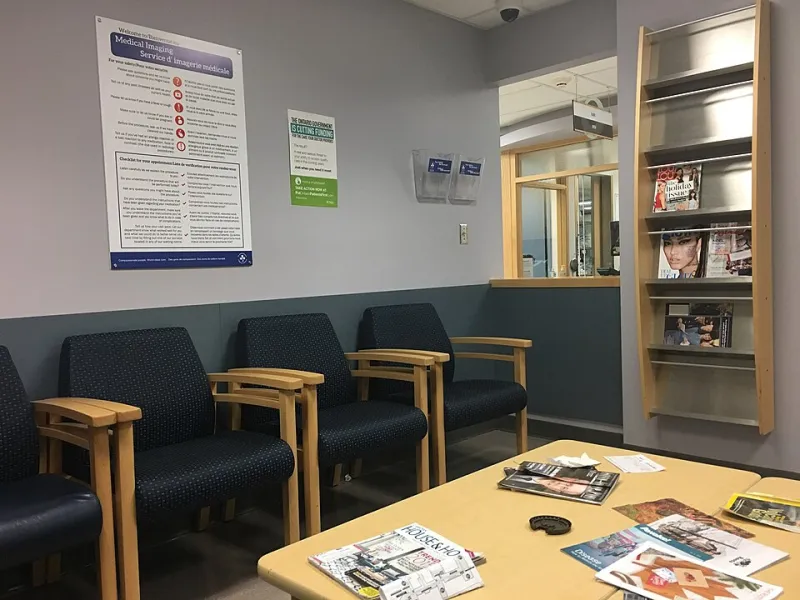
Photo: Ross Dunn, CC BY-SA 2.0, via Wikimedia Commons
For decades, conservative politicians across Canada have managed to hold a peculiar contradiction together: they have governed systems they claim to champion while quietly underfunding the very infrastructure those systems depend upon. For a long time, voters accepted the tension. Today, many are no longer willing to.
In riding after riding — from the outer rings of the Greater Toronto Area to the agricultural communities of southern Saskatchewan — healthcare wait times have become the defining grievance of the 2025 electoral cycle. And the voters most acutely affected are not, as conventional political wisdom might suggest, reliably progressive. Many of them have voted Conservative for the better part of their adult lives.
That calculus is beginning to change.
A System Under Strain — and a Constituency Taking Notice
The numbers are difficult to dismiss. According to the Fraser Institute's own 2023 waiting list survey — a source not known for progressive sympathies — the median wait time between a general practitioner referral and specialist treatment reached 27.7 weeks nationally. In some provinces, patients awaiting orthopaedic procedures waited well beyond a year. Diagnostic imaging backlogs, worsened by pandemic-era disruptions that were never fully resolved, continue to stretch into months for routine MRIs and CT scans.
For younger Canadians, these delays are an inconvenience. For older Canadians — particularly those in their sixties and seventies navigating joint replacements, cardiac monitoring, or cancer screenings — they are something closer to a crisis of dignity.
This demographic skews older, homeowning, and suburban. It is also, historically, among the most reliable pools of conservative electoral support in the country.
Profiles in Political Recalculation
Consider the experience of a retired school administrator in Barrie, Ontario — a riding that has returned Conservative members of Parliament through multiple successive elections. After waiting fourteen months for a knee replacement that her physician described as urgent, she began attending town halls hosted by progressive candidates in her area. She had not previously considered doing so.
"I've voted the same way my whole life," she explained at one such event in late 2024. "But when you're in pain and you're being told to wait, and you see the people who are supposed to represent you shrugging their shoulders — that changes something."
Hers is not an isolated account. Across the province of New Brunswick, where rural hospital closures and emergency room service reductions have made headlines repeatedly over the past three years, local progressive organizers report that healthcare is now the first issue raised at doors — even in communities that have not elected a progressive MP within living memory.
In British Columbia's Interior, where specialist shortages have left tens of thousands of residents without a family physician, similar patterns are emerging. Voters who reliably supported the Conservative Party of Canada in 2019 and 2021 are, according to canvassing data compiled by regional progressive campaigns, expressing significant openness to alternatives.
What the Polling Reveals
Internal and public polling from the past eighteen months tells a consistent story. Healthcare consistently ranks as the top or second-ranked issue for Canadian voters when they are asked to identify their primary concern going into a federal election. More significantly, it ranks as the top issue specifically among voters over the age of fifty-five — the cohort that has historically provided conservative parties with their most dependable margins.
A national survey conducted in the autumn of 2024 found that among self-identified "soft" conservative voters — those who described themselves as conservative-leaning but not firmly committed — fifty-eight per cent expressed dissatisfaction with how conservative governments at both the federal and provincial levels had managed the healthcare file. Thirty-four per cent of that same group indicated they were actively considering voting differently in the next federal election as a direct result of healthcare concerns.
These are not marginal numbers. In ridings where conservative incumbents hold margins of five to eight percentage points, a shift of this magnitude is more than sufficient to alter an outcome.
The Conservative Vulnerability They Cannot Easily Address
What makes healthcare so politically dangerous for conservative incumbents is the nature of the issue itself. Unlike economic questions, where ideological framing can offer some rhetorical cover, healthcare failures are visceral and personal. A voter who cannot access a family doctor, or who watches a parent deteriorate while awaiting a diagnostic test, is not easily persuaded by abstract arguments about fiscal prudence.
Furthermore, the conservative response to healthcare criticism has historically defaulted to deflection — pointing to provincial jurisdiction, blaming pandemic-era disruptions, or promising vague efficiency reforms. These responses, which once satisfied a sufficient proportion of the electorate, are increasingly falling flat with voters who have direct, lived experience of the system's failures.
Progressive campaigns that have engaged seriously with this vulnerability — offering concrete platforms around federal health transfer increases, targeted investments in primary care, and recruitment incentives for healthcare professionals — are finding that the conversation opens doors that have long been closed.
The Organizing Opportunity
For progressive campaigns and the organizers working to shift ridings from red to blue, the healthcare conversation represents a genuine and underutilized opening. The key is specificity. Voters who are frustrated with wait times are not persuaded by general promises to "invest in healthcare." They respond to candidates who can speak to the particular failures they have experienced and articulate credible, detailed plans to address them.
This requires organizers to do their homework. Understanding the specific pressures facing a riding — whether that is a shortage of family physicians, an overwhelmed regional hospital, or inadequate long-term care capacity — allows canvassers and candidates to engage with authenticity rather than platitude.
It also requires a willingness to listen before speaking. Voters who are crossing a long-established political threshold need to feel that their experience is being taken seriously, not simply catalogued as a conversion opportunity. The most effective progressive organizers in competitive ridings are those who approach the healthcare conversation with genuine curiosity and patience.
A Reckoning at the Ballot Box
There is a particular irony in the political moment that is now unfolding. The conservative movement in Canada has long positioned itself as the defender of practical governance — the party of common sense, of fiscal responsibility, of keeping institutions functional without ideological excess. It is precisely that framing that makes healthcare wait times so politically corrosive.
When the system is visibly not working — when the waiting room becomes a symbol of institutional failure rather than bureaucratic inconvenience — the party of practical governance loses its most fundamental claim.
Progressive campaigns that understand this are not simply winning a policy argument. They are dismantling one of conservatism's most durable brand identities, one delayed appointment at a time.
The waiting room, it turns out, is not merely a place where Canadians sit in discomfort. It is increasingly a place where political loyalties are quietly, irrevocably reconsidered.