Fracture Lines: The Conservative MPs Who Are Quietly Defying Their Own Party to Survive
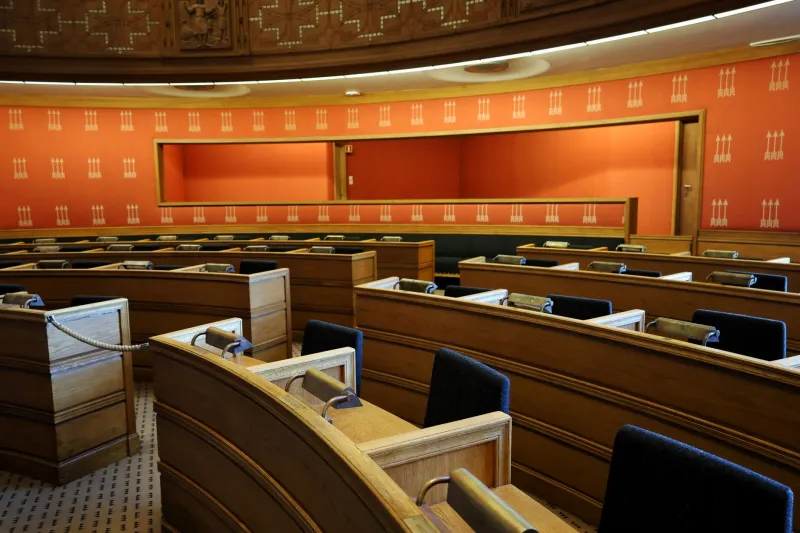
In the architecture of Canadian parliamentary politics, backbench discipline is the mortar that holds the structure together. But mortar cracks under sustained pressure. And across a growing number of Conservative-held ridings, that pressure — applied steadily by constituents who feel abandoned by their own representatives — is beginning to show.
What is emerging is not a wholesale ideological revolt. It is something more strategically significant: a quiet, riding-by-riding fracturing of Conservative caucus cohesion on precisely the issues that progressive organizers have spent years elevating — pharmacare, housing affordability, and Indigenous reconciliation. For those of us working to shift Canada's political map, understanding this fragmentation is not merely interesting. It is essential.
The Pressure Beneath the Surface
Conservative MPs do not break with their party openly, as a rule. The political costs are steep: committee assignments disappear, leadership endorsements evaporate, and the party's formidable campaign infrastructure becomes suddenly unavailable. Yet in recent parliamentary sessions, a discernible pattern has emerged. On procedural votes, private member's bills, and committee reports touching on prescription drug coverage, rental housing supports, and reconciliation legislation, a subset of Conservative MPs have either abstained, voted with the opposition, or publicly softened their party's stated position in local media.
This is not coincidence. It is arithmetic.
In ridings where the margin of victory in the last federal election was fewer than 3,000 votes — and there are dozens of them — a Conservative MP who follows the party line on pharmacare opposition risks alienating precisely the seniors, working families, and rural residents who put them in office. The calculus becomes uncomfortable quickly: loyalty to caucus or loyalty to the people who actually vote.
What Constituents Are Telling Their MPs
Grassroots organizers affiliated with progressive campaigns across British Columbia, Ontario, and Atlantic Canada have documented a striking phenomenon at town halls and community meetings over the past eighteen months. Conservative MPs — not just their challengers — are fielding increasingly pointed questions about drug costs, rental vacancy rates, and the federal government's obligations under the United Nations Declaration on the Rights of Indigenous Peoples.
In one riding in northern Ontario, a Conservative MP who had reliably voted against pharmacare expansion found himself facing a standing-room crowd at a local legion hall, where retired workers and their adult children demanded to know why insulin costs more in Canada than across the border. He did not have a satisfying answer. His subsequent statements to local press took a markedly softer tone than his party's national messaging.
This is the mechanism at work: direct, sustained, community-level pressure that makes the abstract concrete. When a constituent puts a pharmacy receipt on the table, the ideological argument against drug coverage loses its abstraction entirely.
Housing and the Suburban Defection
Perhaps nowhere is the backbench strain more visible than on housing policy. The Conservative Party's national platform has leaned heavily on supply-side rhetoric — zoning reform, municipal accountability, cutting red tape — while resisting federal investment in deeply affordable housing. This position plays reasonably well in certain exurban ridings. It plays considerably less well in suburban communities where the adult children of Conservative voters cannot afford to rent a one-bedroom apartment within an hour's commute of their parents.
Several Conservative MPs representing outer suburban ridings in the Greater Toronto and Greater Vancouver areas have quietly advocated, through committee testimony and local media, for positions that diverge meaningfully from their party's federal stance. They are not endorsing progressive housing policy wholesale. But they are creating distance — and that distance is a signal to voters that the party's position is not monolithic.
For progressive campaigns, this is an opening. When a Conservative MP acknowledges that the housing crisis demands a federal response beyond what their party is currently offering, they are, however inadvertently, validating the frame that progressive candidates have been advancing for years.
Reconciliation: The Fault Line That Won't Close
On Indigenous reconciliation, the tensions within the Conservative caucus are perhaps the most complex. The party's base includes constituencies with deeply divergent views — resource-sector communities where reconciliation is seen as an obstacle to economic development, and urban or northern ridings where Indigenous voters and their allies represent a meaningful electoral block.
Conservative MPs navigating this fault line have occasionally broken publicly with caucus positions on legislation tied to UNDRIP implementation, residential school commemoration, and resource revenue sharing. These breaks are rarely dramatic. They manifest as a carefully worded statement, a vote of abstention, a refusal to appear alongside party leadership at an event that would require them to defend a position their constituents find offensive.
But the cumulative effect is significant. Each break normalizes the idea that Conservative unity is conditional — that the party's positions are negotiable at the riding level in ways that national messaging obscures.
What This Means for Progressive Strategy
The fragmentation of Conservative backbench discipline is not, by itself, a victory for progressive organizers. An MP who privately sympathizes with pharmacare while publicly voting against it is still voting against it. The strategic value of this phenomenon lies elsewhere.
First, it identifies which ridings are genuinely in play. An MP who is visibly managing internal conflict between party loyalty and constituent pressure is an MP whose seat is not as safe as the national polling averages suggest.
Second, it provides a messaging framework. Progressive campaigns in these ridings can draw explicit contrasts — not just between their candidate and the Conservative incumbent, but between what the incumbent says locally and how they vote in Ottawa. That gap is a persuasion tool of considerable power.
Third, and perhaps most importantly, it signals to persuadable voters that their instincts are not disloyal. When even a Conservative MP hedges on pharmacare, it becomes easier for a lifelong Conservative voter to ask whether their vote might be better placed elsewhere.
The backbench is fracturing. The question is whether progressive campaigns are organized and resourceful enough to widen those fractures before the next writ drops. That is precisely the work Red to Blue CA exists to support — riding by riding, conversation by conversation, until the map changes.