When the Furnace Bill Becomes a Political Awakening: How Energy Economics Are Pulling Conservative Homeowners Toward Progressive Candidates
For decades, Canadian homeowners have been among the most dependable pillars of Conservative electoral support. The logic was straightforward enough: property ownership breeds a particular kind of political conservatism — an instinct to protect what one has built, to resist redistribution, and to view government intervention with suspicion. Party strategists on the right understood this intuitively and built their messaging accordingly.
But something has shifted. Across ridings from the Fraser Valley to the outer suburbs of Ottawa, progressive organizers are encountering a voter profile that defies the old assumptions: the homeowning conservative who opened a home energy audit report, watched their basement flood for the second time in three years, or received a retrofit incentive cheque from a provincial programme — and began asking questions that their traditional party allegiance could no longer answer.
This is not a story about environmentalists converting conservatives. It is a story about economics, property values, and the slow, undeniable arithmetic of climate exposure.
The Audit That Changed the Conversation
In ridings across Ontario's 905 belt and British Columbia's suburban interior, progressive canvassers have reported a consistent phenomenon over the past two electoral cycles: the moment a homeowner mentions their energy audit, the conversation changes register entirely.
Federal and provincial retrofit incentive programmes — including the Canada Greener Homes Grant and its provincial counterparts — have placed energy auditors inside hundreds of thousands of Canadian homes. What those auditors leave behind is not an ideological document. It is a financial one: a detailed accounting of heat loss, inefficiency, and projected savings. For a homeowner carrying a variable-rate mortgage in a period of sustained interest rate pressure, the numbers are not abstract.
Progressive campaigns that have trained their canvassers to engage on this terrain — to ask about the audit, to discuss the grant application process, to connect federal climate policy directly to the line item on a household budget — have found it opens doors that straightforward policy arguments cannot.
"We stopped leading with the environment," one organizer working in a swing riding east of Toronto explained during a recent field debrief. "We started leading with the bill. The environment is still the reason the bill matters, but we let the homeowner get there themselves."
Property Values and the Uninsurable Future
The insurance industry has, perhaps inadvertently, become one of the most effective recruiters for climate pragmatism among conservative homeowners. Across Canada's flood-prone river valleys, wildfire-adjacent communities, and coastal zones facing storm surge, home insurance premiums have escalated sharply — or coverage has been withdrawn altogether.
This is not a distant, theoretical consequence of climate change. It is a letter arriving in the mailbox, a conversation with a broker, a line on a renewal document that has increased by thirty or forty percent in a single year. For a homeowner whose primary asset is their property, the prospect of an uninsurable or underinsured home is existential in a way that abstract emissions targets simply are not.
Progressive electoral strategists who have studied these pressure points argue that the Conservative Party's resistance to meaningful climate policy is, in practical terms, a direct threat to the financial security of its own base. The challenge has been communicating that argument in language that resonates rather than alienates.
Ridings in Alberta's smaller cities — communities with significant proportions of homeowners who have watched neighbouring municipalities grapple with flooding, and who have absorbed the insurance consequences — are among the most fertile ground for this kind of persuasion work. The ideological resistance remains real, but it is increasingly in tension with lived financial experience.
The Retrofit as a Political On-Ramp
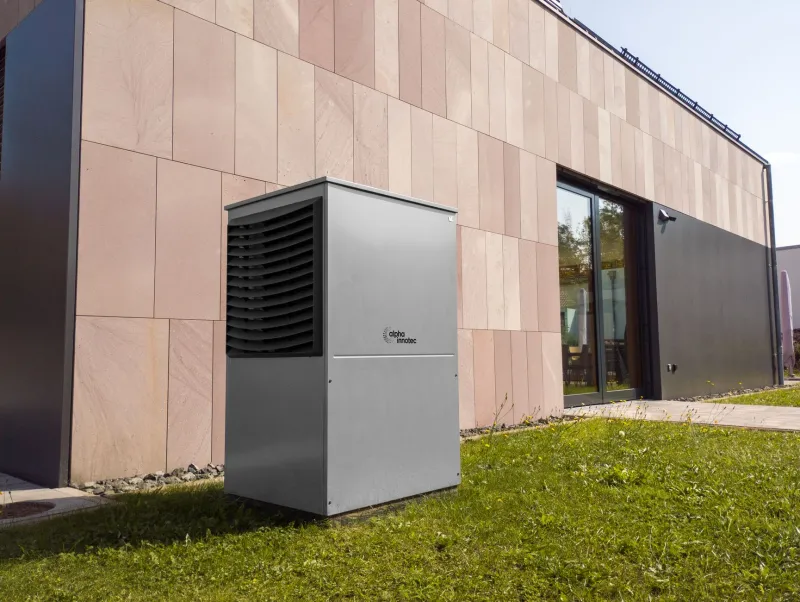
What makes retrofit incentive programmes particularly valuable from an electoral strategy perspective is that they create a tangible, positive interaction between a voter and progressive governance. This is not a hypothetical benefit or a promised future outcome. It is a rebate cheque, a heat pump installation, upgraded insulation — something a homeowner can point to and feel.
Organizers in ridings where provincial NDP or federal Liberal governments have delivered visible retrofit programmes report that these interventions generate a specific kind of persuadable voter: someone who has received concrete material benefit from progressive policy and is now, perhaps for the first time, genuinely open to reconsidering their broader political alignment.
This is the organizer's equivalent of a crack in a foundation wall — not a collapse, but an opening. The work that follows is patient and relational. It involves connecting the retrofit experience to a broader set of progressive commitments: housing affordability, public health, the long-term management of infrastructure in a changing climate. None of this happens in a single doorstep conversation. But the retrofit creates the conditions for a conversation that would otherwise never begin.
Framing That Works — and Framing That Doesn't
Not every approach to this voter cohort has proven effective. Progressive campaigns that have led with language emphasising collective responsibility, global emissions targets, or the moral urgency of the climate crisis have found that these frames activate resistance rather than curiosity among conservative-leaning property owners.
What works, field evidence increasingly suggests, is a framing built around three pillars: protection, investment, and practical control.
Protection speaks to the homeowner's desire to preserve the value and security of their property against climate-related risks. Investment speaks to the financial logic of retrofitting — lower operating costs, increased resale value, access to incentive programmes. Practical control speaks to the conservative instinct for self-reliance: the idea that retrofitting a home is something a homeowner does for themselves, on their own terms, rather than something done to them by distant regulators.
Canvassers trained in this framework report markedly different reception rates in previously resistant households. The ideological distance does not disappear, but it becomes navigable.
The Riding-Level Implications
For Red to Blue CA and the organizers working to shift the electoral map, the strategic implications of this voter movement are significant. Conservative-held ridings with high rates of homeownership, aging housing stock, and measurable climate exposure — whether from flooding, wildfire smoke, or extreme heat events — represent a distinct and underexplored category of persuasion opportunity.
These are not ridings where progressive campaigns need to win the ideological argument. They are ridings where the practical argument is already being made by the weather, the insurance broker, and the energy auditor. The campaign's task is simply to be present in that conversation — and to be the political home that answers the questions those conversations are already raising.
The furnace bill, it turns out, is a more powerful organising document than any policy platform. Progressive campaigns that understand this are not waiting for conservatives to become environmentalists. They are meeting property owners exactly where they already are — and walking with them, one practical step at a time, toward a different kind of political future.