Opening Doors: How Women Candidates Are Unlocking Conservative Strongholds for the Progressive Movement
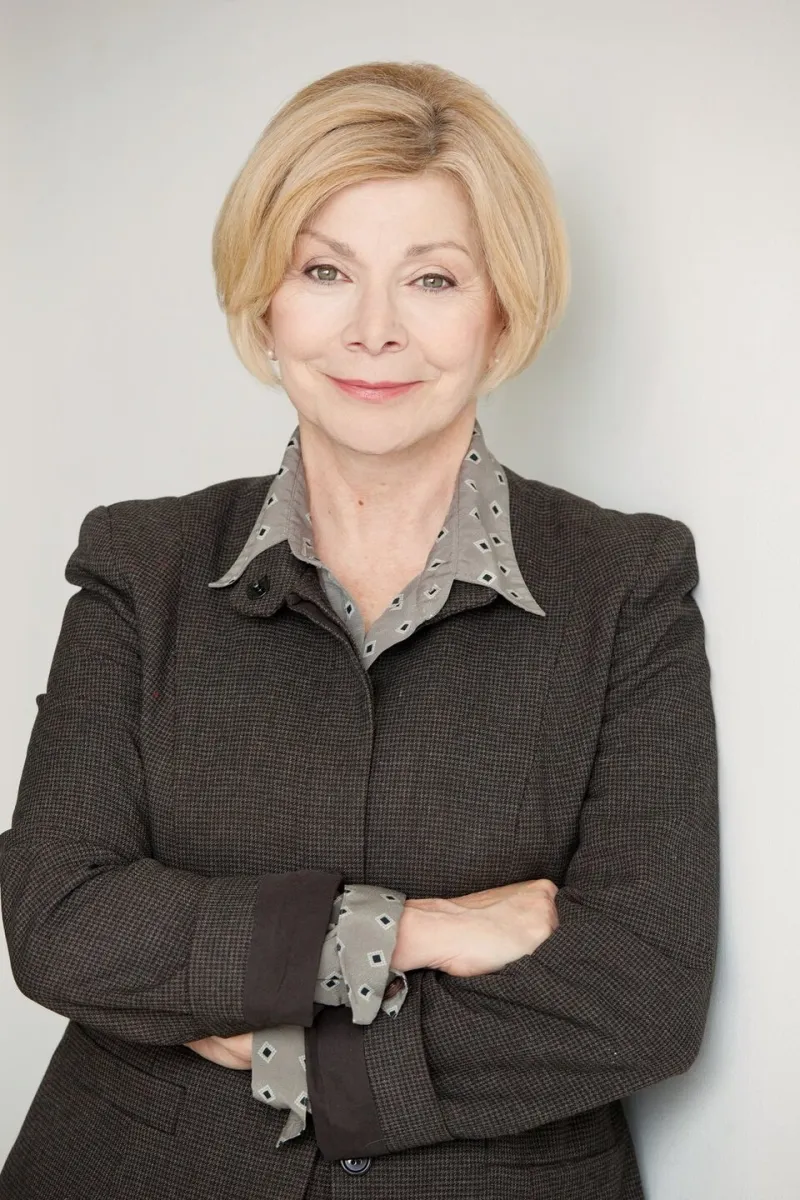
Photo: Spencer hm, CC BY-SA 3.0, via Wikimedia Commons
When Fatima Khalid won the riding of Mississauga Centre for the Liberals in 2019, defeating a Conservative incumbent in a seat the party had held for over a decade, campaign post-mortems pointed to several factors: strong ground organization, a favourable national environment, precise micro-targeting. What received comparatively less attention was the degree to which Khalid's candidacy itself — her identity as a woman, a Muslim, a former community organizer — altered the fundamental dynamics of voter contact in a riding that had never elected a woman to Parliament.
That phenomenon, replicable and increasingly documented, sits at the heart of one of the most compelling strategic conversations happening inside progressive campaign circles across Canada today.
Beyond Representation: The Strategic Dimension
The argument for recruiting and running women candidates is most frequently made in the language of democratic representation, and rightly so. Canada's House of Commons remains significantly underrepresented by women relative to the population, and that gap is most pronounced in ridings held by the Conservative Party of Canada.
But the strategic case — the electoral mathematics of why women candidates outperform expectations in competitive conservative ridings — deserves its own rigorous examination, because it is increasingly supported by evidence that campaign professionals cannot afford to ignore.
Research conducted following the 2019 and 2021 federal elections found that in ridings where the margin between Conservative and progressive candidates was under ten percentage points, female progressive candidates demonstrated measurably stronger performance among several key voter segments: suburban women over forty, voters identifying as non-partisan or weakly partisan, and recent immigrants in communities with strong family-values cultural orientations. These are precisely the segments that determine outcomes in competitive ridings.
"It is not simply about gender solidarity," explains one senior campaign strategist who has managed competitive riding campaigns in both Ontario and Alberta. "It is about perceived authenticity and approachability. In communities where voters have grown disenchanted with a long-serving male incumbent who feels remote and transactional, a woman candidate who has lived in the riding, raised children there, coached hockey or volunteered at the food bank — she breaks through a kind of cynicism that male challengers sometimes struggle to overcome."
Voices From the Ground
The experiences of women who have campaigned in conservative territory illuminate the strategic insight in human terms.
One progressive candidate who ran in a semi-rural Ontario riding in 2021, reducing a Conservative majority of over eight thousand votes to fewer than two thousand, describes her canvassing experience in terms that are both practical and revealing. "I knocked on doors in subdivisions where every lawn sign was blue," she recalls. "And I had conversations that my male colleagues told me they could not have had. Women would open the door, see me, and invite me in for coffee. Not because I was a progressive — because I was a woman who looked like them and had the same concerns about their kids' futures that they did. The politics came second."
That sequencing — relationship before partisanship — appears repeatedly in accounts from female candidates operating in conservative ridings. It reflects a broader truth about how voter persuasion actually works in communities where progressive parties have historically been treated as culturally foreign.
Cracking the Cultural Code
Many of Canada's safest Conservative ridings are safe not primarily because of ideological conviction but because of cultural familiarity. Voters in these communities have historically perceived Conservative candidates as people who look like them, speak like them, and share their priorities. Progressive parties have often struggled to field candidates who can disrupt that perception.
Women candidates — particularly those with deep community roots, professional backgrounds in healthcare, education, or social services, and personal stories that resonate with the specific character of the riding — have demonstrated a unique capacity to challenge that cultural shorthand.
In Alberta's smaller cities, female NDP candidates in the 2023 provincial election outperformed their party's polling in their individual ridings by margins that analysts attributed substantially to candidate-specific voter behaviour. In suburban ridings around Vancouver and the Lower Mainland, Liberal and NDP women candidates have repeatedly held or flipped seats that party strategists had written off based on aggregate riding data.
The Recruitment Imperative
Recognizing the strategic advantage is one matter. Acting on it requires a deliberate organizational commitment that many riding associations have historically failed to make.
Barriers to female candidacy in competitive conservative ridings are well documented: the financial burden of competitive campaigns, the personal cost of public scrutiny, the absence of mentorship networks, and the discouraging assumption — often communicated implicitly through riding association culture — that certain seats are simply not worth the effort.
Progressive parties and allied organizations are increasingly developing structured recruitment pipelines designed to identify potential women candidates in target ridings years before an election cycle begins. These programs combine financial support, campaign training, and ongoing mentorship with a clear-eyed acknowledgment that the riding is competitive and that the candidate is being asked to undertake something genuinely difficult.
"The worst thing you can do is recruit a talented woman to run in a hard seat and then leave her without resources," says one national party official involved in candidate development. "If you are serious about the strategy, you have to be serious about the investment. Otherwise you are using people, not supporting them."
What This Means for the Progressive Movement
The evidence accumulating from competitive riding campaigns across Canada points toward a strategic reorientation that goes beyond any single election cycle. Ridings that have returned Conservative members for a decade or more are not monolithic. They contain communities of voters whose priorities — healthcare, affordability, climate resilience, public education — align more closely with progressive platforms than their historic voting patterns suggest.
The challenge has always been contact: how do you reach those voters, earn their trust, and convert latent sympathy into active support? Female candidates, particularly those embedded in the social fabric of their communities, are demonstrating an answer.
For organizers at Red to Blue CA and allied campaign infrastructure, the implication is straightforward. The map changes when the candidate changes. And in riding after riding across this country, the candidates who are changing the map are women.