Generation Change: How Young Canadians Are Rewriting the Rules of Political Organizing

Photo: Photographer not named., Public domain, via Wikimedia Commons
For decades, political strategists treated youth voter turnout as an afterthought — a category to be managed rather than mobilized. That calculus is changing, and the people driving that change are often not yet thirty years old.
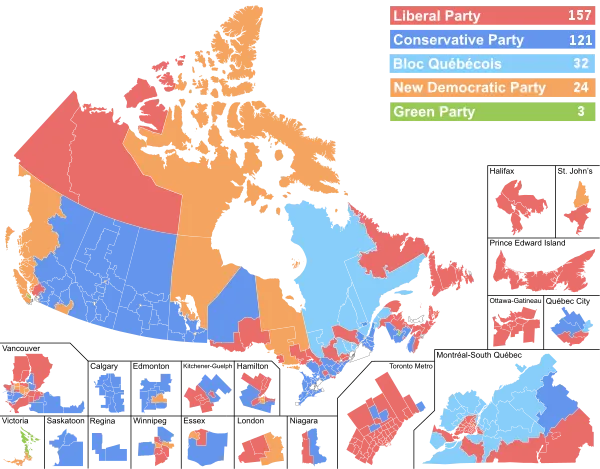
Across ridings from Halifax to Kelowna, a generation of Gen Z Canadians is building grassroots networks that defy the conventional wisdom about young people and politics. They are organizing in Discord servers and campus common rooms, knocking on doors in suburban subdivisions, and having the kinds of frank, peer-to-peer conversations that no party mailer could ever replicate. The results are beginning to show up in the numbers — and in the shifting competitive landscape of federal ridings that were once considered safely Conservative.
Who Is Leading the Charge?
Consider the work happening in Kitchener–Conestoga, a riding that has returned Conservative members to Parliament for years running. A loose coalition of students from the University of Waterloo and Wilfrid Laurier University began holding informal political education evenings in early 2023 — not fundraisers, not rallies, but structured conversations about housing affordability, climate policy, and what participants described as "the gap between what politicians promise and what our generation actually experiences."
What began as a dozen people crowded into a rented common room has since expanded into a network of more than two hundred engaged young voters, many of whom had never previously considered themselves politically active. Organizers deliberately avoided formal party affiliation in the early stages, prioritising trust-building over brand loyalty.
Similar dynamics are unfolding in ridings across British Columbia's Lower Mainland. In Cloverdale–Langley, youth-led canvassing efforts have targeted apartment complexes and transit corridors — spaces where young renters cluster and where traditional door-knocking campaigns rarely venture. The organizers there speak openly about the frustration of watching their parents' generation vote on the basis of values that no longer reflect the economic realities facing young Canadians.
The Issues That Are Driving the Shift
Housing sits at the centre of nearly every conversation these organizers are having. In a country where the dream of homeownership has become structurally inaccessible for millions of people under thirty-five, the political implications are profound. Young voters who might once have absorbed Conservative-leaning fiscal values from their families are now arriving at the ballot box with a distinctly different set of grievances.
Climate anxiety is a close second. Unlike older cohorts, for whom environmental concern is often an abstract ethical commitment, many Gen Z Canadians describe climate change as an immediate and personal threat — one that shapes their career decisions, their family planning, and their assessment of which political parties deserve their trust.
Cost of living, student debt, and the precarious nature of gig and contract work round out the issues that organizers say consistently resonate in their peer networks. These are not abstract policy debates. They are the daily texture of young Canadian life, and the organizers who speak to them fluently are the ones gaining traction.
Strategies That Are Actually Working
If there is a single insight that unites the most effective Gen Z organizing efforts across the country, it is this: authenticity outperforms polish every time.
Young voters are extraordinarily sensitive to messaging that feels manufactured or condescending. Campaigns that deploy youth surrogates as props rather than genuine voices tend to backfire. The organizers who are making real inroads are those who lead with their own stories — who can articulate, in plain language, how policy decisions have shaped their own lives.
Here are the approaches that organizers on the ground are finding most effective:
Relational organizing over broadcast messaging. Rather than posting generic content to social media and hoping it lands, successful youth organizers are building one-to-one relationships within their existing social networks. The ask is simple: have a conversation with someone you already know, share why this election matters to you personally, and invite them to get more involved.
Meeting people where they are. University campuses are an obvious starting point, but the most innovative organizers are showing up at music venues, community sports leagues, food banks, and transit hubs. Anywhere young people gather is a potential organizing space.
Making the connection between policy and daily life explicit. Abstract arguments about fiscal responsibility or democratic norms rarely move people. Concrete, specific connections — between zoning policy and rental prices, between transit investment and commute times — do.
Building infrastructure between elections. The organizers who are most effective are not simply activating people in the final weeks of a campaign. They are cultivating engaged communities year-round, so that when an election is called, they have an existing network rather than a list of cold contacts.
The Ridings to Watch
Several ridings are emerging as bellwethers for youth-driven political realignment. In addition to Kitchener–Conestoga and Cloverdale–Langley, organizers and analysts are watching Niagara Falls, Saskatoon–University, and Eglinton–Lawrence closely. Each of these ridings combines a significant post-secondary student population with a broader demographic shift toward younger, urban-adjacent residents — exactly the conditions under which sustained youth organizing tends to produce measurable results.
The federal electoral map has been redrawn before by demographic waves that conventional wisdom failed to anticipate. The evidence on the ground suggests that a new wave may be building — and that the young Canadians building it are doing so with more sophistication, more patience, and more strategic clarity than any generation of youth organizers before them.
For progressive campaigns paying attention, the message is clear: the investment required to support and amplify this work is modest. The potential return — in votes, in volunteers, and in the long-term realignment of Canadian politics — is enormous.
The generation that grew up under the shadow of a housing crisis, a climate emergency, and a pandemic is not apathetic. They are organising. The question is whether the broader progressive movement will meet them with the resources and respect they have already earned.