One Story at a Time: How Personal Health Struggles Are Flipping Conservative Voters in Ridings That Weren't Supposed to Move
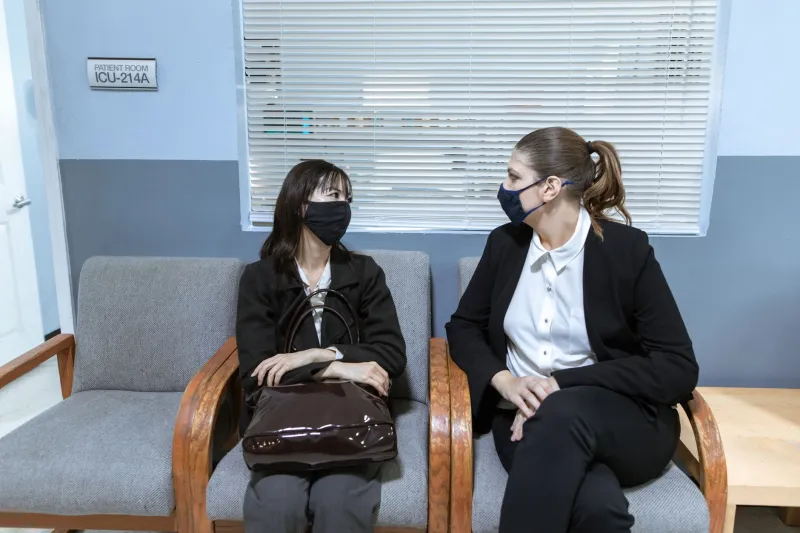
Somewhere in a church hall in Simcoe County, a retired machinist named Gerald is telling a room of twelve people about the fourteen months he spent waiting for a knee replacement. He is not a professional advocate. He has never attended a political rally. He voted Conservative in every federal election since 1993. But tonight, he is speaking to his neighbours — some of them lifelong Tories themselves — about what that waiting period cost him: his part-time job, his mobility, and very nearly his marriage.
Gerald's story is not an anomaly. It is, increasingly, a strategy.
Across Canada's most entrenched Conservative ridings, progressive organisers are discovering that the most effective tool in their persuasion arsenal is not a well-rehearsed policy argument or a damning attack advertisement. It is a postcard, a kitchen table conversation, or a two-minute video on a community Facebook page — each one anchored in the specific, lived healthcare experience of a real constituent.
Why Emotion Moves Voters Where Ideology Cannot
Political science has long acknowledged the persuasive power of narrative over statistics. But what is emerging in targeted ridings across Ontario, Alberta, and British Columbia goes further than conventional wisdom suggests. Organisers are not simply deploying sympathetic stories as a rhetorical garnish on top of policy messaging. They are restructuring their entire outreach model around personal testimony — and they are doing so with remarkable precision.
The logic is straightforward: in a riding where the Conservative incumbent has held their seat for three or four terms, progressive messaging about universal pharmacare or mental health funding can land as abstract, partisan, or even threatening to voters with deep tribal loyalties. But a neighbour's account of rationing medication because of cost, or a daughter describing her father's emergency room wait, carries no party affiliation. It carries credibility.
"We stopped leading with the platform," says one organiser working in a suburban riding outside Calgary who asked not to be named due to ongoing campaign sensitivities. "We started leading with Margaret from down the street who waited eight months for a cancer biopsy. That changed everything."
The Postcard Campaign Model
In several ridings identified by Red to Blue CA as competitive for the 2025 cycle, local progressive groups have begun deploying what they call hyperlocal testimony campaigns — a methodology borrowed partly from labour organising traditions and partly from the American progressive movement's deep canvassing playbook.
The mechanics are deceptively simple. Volunteers identify constituents with compelling healthcare experiences — delayed procedures, uninsured mental health services, out-of-pocket pharmacy costs — and work with them to distil those experiences into brief, shareable formats. Handwritten postcards. Short testimonial videos. Door-to-door conversations anchored in the volunteer's own story rather than a scripted pitch.
The emphasis on authenticity is deliberate and non-negotiable. Organisers consistently report that voters — particularly those with Conservative leanings — are acutely sensitive to messaging that feels manufactured or politically motivated. The moment a personal story begins to sound like a campaign talking point, its persuasive value collapses.
"People can smell a script," notes a community health advocate in the Fraser Valley who has been training volunteers in testimony-based canvassing. "The power is in the mess — the hesitation, the real detail, the part where they say they don't know who to blame but they know something is broken."
Mental Health, Pharmacare, and the Gaps Conservative Voters Feel
Three healthcare pressure points are emerging as particularly resonant in Conservative-held ridings: access to mental health services, prescription drug affordability, and surgical wait times.
Mental health is proving especially potent in rural and small-town ridings, where the cultural stigma around psychological struggles has historically suppressed open conversation. The irony is that this same cultural reticence — which once kept these stories private — now makes them more powerful when they are shared. A farmer in Manitoba speaking publicly about his son's addiction treatment journey, or a school teacher in northern Ontario describing her own breakdown after two years on a waitlist for a psychiatrist, carries the weight of breaking a silence that the community recognises.
Pharmacare resonates differently. In ridings with higher proportions of seniors and fixed-income households, the monthly arithmetic of prescription costs is not an abstraction. Organisers have found that asking voters a single question — "Have you or anyone in your household ever had to choose between medication and something else?" — consistently opens doors that ideological framing cannot.
Surgical wait times, meanwhile, occupy a unique space in the Conservative voter's imagination. Many of these constituents have spent years defending the principle of publicly funded healthcare while privately absorbing the frustration of its failures. When a fellow Conservative voter speaks candidly about what those failures have cost them personally, the cognitive dissonance becomes difficult to sustain.
Bypassing Traditional Media Entirely
What distinguishes this generation of testimony-based campaigning from earlier forms of progressive outreach is its deliberate avoidance of traditional media channels. Organisers are not pitching these stories to local newspapers or regional television stations. They are routing them through the informal networks that already govern social trust in these communities: church bulletins, hockey association newsletters, neighbourhood Facebook groups, and the front porches of people who know their neighbours by name.
This approach reflects a hard-won lesson from previous campaign cycles. In ridings where the local media landscape skews conservative — or where media presence is thin to begin with — progressive messaging that travels through institutional channels often arrives pre-labelled and pre-dismissed. Peer-to-peer transmission, by contrast, carries the implicit endorsement of the person delivering it.
"When your neighbour tells you their story, you don't fact-check it," observes a veteran organiser who has worked in competitive ridings across the Prairies. "You feel it. That's the whole difference."
What This Means for the 2025 Landscape
The implications for Canada's upcoming federal electoral cycle are significant. Ridings that have been written off by national progressive strategists — seats where the Conservative margin of victory has been comfortable enough to deter serious investment — are beginning to show early signs of softening, particularly in their healthcare-adjacent demographic segments.
This is not to suggest that personal storytelling alone can overturn a ten-point deficit. Electoral arithmetic does not bend to anecdote. But in the context of a broader progressive strategy — one that combines ground-level persuasion with targeted voter mobilisation and candidate visibility — testimony-based healthcare campaigns are emerging as a genuine force multiplier.
More importantly, they are changing the nature of the conversation in these ridings. When a Conservative-leaning voter begins to articulate, in their own words, the ways in which the current healthcare system has failed them, they are not simply expressing a grievance. They are beginning to question the political alignment that has, until now, felt self-evident.
Gerald, the retired machinist from Simcoe County, has not yet declared a change in his voting intentions. But he is showing up to those church hall meetings. He is bringing his brother-in-law. And he is asking questions he says he never thought to ask before.
In the mathematics of a close riding, that is precisely where change begins.