Rooted in Place: How Local Volunteers Are Laying the Groundwork for Progressive Politics in Communities That Party Headquarters Forgot
For most of her adult life, Diane Kowalchuk assumed that politics happened somewhere else — in Ottawa, in provincial legislatures, in rooms she had never been invited into. A lifelong resident of a small agricultural community in central Saskatchewan, she had watched election after election pass through her town like weather: predictable, unremarkable, and entirely outside her control. The same party won. The same signs went up. The same handshakes were exchanged at the legion hall.
Then her local hospital lost its overnight emergency services.
"That was the moment I stopped being a bystander," she says. "I didn't become political because of a party. I became political because of my town."
Kowalchuk's experience is not unique. Across Canada, in communities that have returned conservative candidates for decades without serious contest, a quiet but consequential shift is underway. Progressive organizers — many of them first-time volunteers with no prior campaign experience — are embedding themselves in the everyday life of their communities and building political infrastructure where none previously existed. They are not waiting for direction from national party offices. They are starting from scratch, and they are starting from home.
Why Party Headquarters Often Gets It Wrong
Traditional campaign strategy tends to flow downward. A central office identifies target ridings, deploys resources, and sends messaging that has been focus-grouped and polished to appeal to the broadest possible audience. In competitive urban and suburban ridings, this approach has merit. In deeply conservative rural and small-town communities, it frequently fails — not because the policies are wrong, but because the delivery is disconnected from lived experience.
"When someone from outside shows up and tells you what you should care about, the instinct is to reject it," explains Marcus Thibodeau, a community organizer who has spent the past three years working in ridings across northern Ontario that have not elected a progressive MP in a generation. "But when your neighbour — someone who coaches your kid's hockey team, who you see at the farmers' market — starts talking about the same issues? That lands differently."
This is the core insight driving a new wave of volunteer recruitment: trust is hyperlocal, and political persuasion follows trust. National messaging, no matter how well crafted, cannot manufacture the credibility that comes from shared geography, shared history, and shared stakes.
Building the Pipeline, One Conversation at a Time
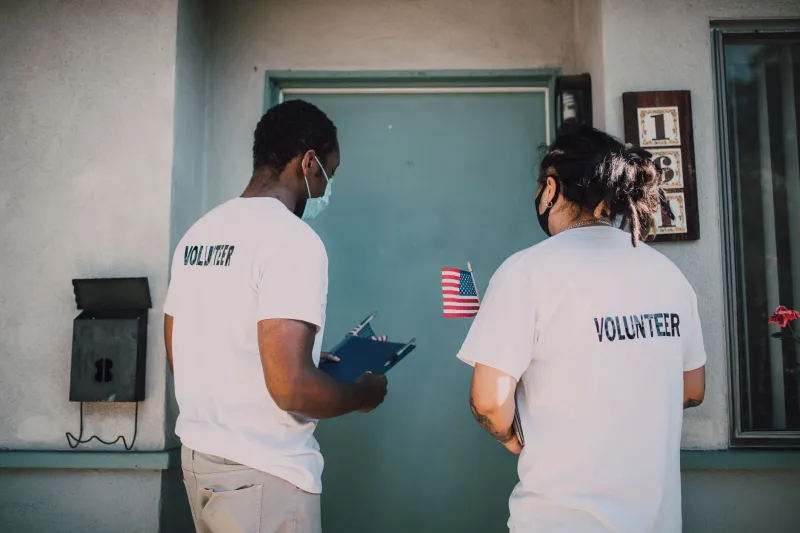
The volunteer pipeline that organizers like Thibodeau are constructing does not begin with a phone bank or a canvassing script. It begins with listening.
In practice, this means showing up — at town council meetings, at community fundraisers, at agricultural fairs — and asking people what concerns them most about where they live. Housing affordability in communities that have seen an influx of remote workers. The closure of rural schools and the consolidation of services into distant urban centres. The rising cost of farm inputs and the squeeze on family operations that have been working the same land for three generations. Broadband access. Mental health resources. The particular loneliness of aging in a community whose young people have left.
These are not issues that fit neatly into partisan branding. They are the texture of daily life in small-town Canada, and they are the entry points through which effective organizers invite their neighbours into political engagement.
"I never lead with the party," says Fatima Osei, who began volunteering in her southwestern Alberta community after a dispute over water rights drew her into local advocacy. "I lead with the problem. The party is just the vehicle we're using to try to solve it."
Osei has since trained more than forty volunteers in her region — people who, like her, came to political organizing through a specific, tangible grievance rather than ideological conviction. She describes her role less as a recruiter and more as a translator: someone who helps community members see the connection between the problems they are already angry about and the political choices available to address them.
Training for the Long Game
One of the most significant challenges facing progressive campaigns in conservative-held ridings is continuity. An election cycle ends, resources are redirected, and whatever momentum had been built begins to dissipate. Volunteers who gave months of their time feel abandoned. The infrastructure that was painstakingly assembled is left to decay.
The organizers who are doing this work most effectively have internalized a different timeline. They are not building for the next election. They are building for the one after that, and the one after that.
This means investing in training that extends beyond campaign mechanics. Volunteers learn how to facilitate community meetings, how to identify and develop emerging local leaders, how to maintain relationships with potential supporters between electoral cycles, and how to document community concerns in ways that can inform future policy platforms. In several ridings, informal organizer networks have established year-round touchpoints — seasonal community events, online forums, mutual aid initiatives — that keep progressive-minded residents connected and engaged long after the writ has been dropped and the campaign signs have come down.
"We lost that election," Thibodeau acknowledges, speaking of a northern Ontario contest where his candidate came closer than any progressive challenger in two decades. "But we didn't lose the relationships. And relationships are what the next campaign is built on."
The Compound Effect of Local Investment
What is emerging from this model of organizing is something that conventional campaign strategy rarely produces in communities like these: a self-sustaining local political culture. Volunteers who were recruited to knock on doors in one election cycle become the trainers for the next wave. Residents who initially engaged around a single issue — a hospital closure, a school consolidation, a contaminated water supply — begin to understand the broader systemic forces at work and expand their political engagement accordingly.
Kowalchuk, the Saskatchewan woman whose political awakening began with the loss of her town's emergency services, is now coordinating volunteers across three neighbouring communities. She has helped organize two town halls, contributed to a brief presented to a provincial health authority, and mentored six first-time canvassers through their initial door-knocking shifts.
"I used to think that people in places like mine just didn't care about politics," she reflects. "Now I think they cared all along. They just didn't believe it was possible to change anything. Part of what we're doing is proving that it is."
That proof, accumulating one conversation and one community at a time, is the foundation upon which lasting political change is built. For Red to Blue CA, the lesson is clear: the ridings that seem most immovable are often the ones where the absence of progressive infrastructure is itself the obstacle. Remove that obstacle — invest in people, invest in place, invest in the long game — and the ground begins to shift.
The volunteer pipeline is not glamorous work. It does not generate headlines or viral moments. But in communities that party headquarters forgot, it may be the most important work of all.