Beyond the 401: How Canada's Suburban Corridors Are Turning into Progressive Proving Grounds
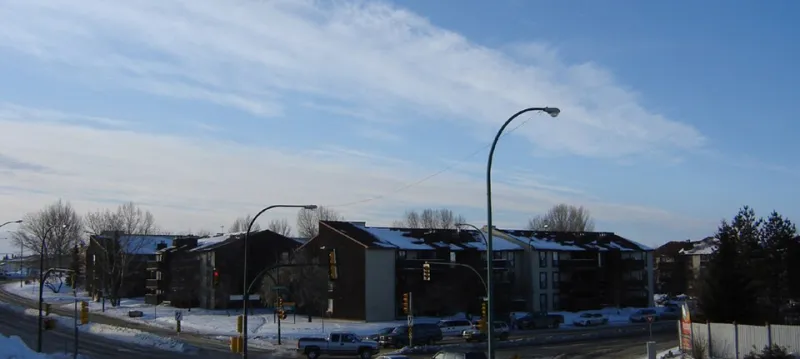
Photo: Julia Adamson SriMesh talk, CC BY-SA 2.5, via Wikimedia Commons
For decades, the political calculus of Canadian federal elections treated the suburbs as settled territory. Sprawling communities ringing Toronto, Vancouver, and Calgary were understood to be conservative by disposition — homeowners protective of property values, commuters suspicious of government intervention, and newer arrivals eager to assimilate into a culture of fiscal caution. That assumption is now crumbling, riding by riding, election by election.
The suburbs are changing. And with them, so is the country.
A Demographic Tide That No Party Can Ignore
The single most consequential force reshaping suburban Canada is immigration. Over the past two decades, the communities that have absorbed the largest share of newcomers are not downtown cores — they are the mid-ring suburbs: Brampton, Mississauga, Surrey, and the outer reaches of Calgary's northeast quadrant. These communities are younger, more diverse, and increasingly politically activated.
What is striking is not merely the demographic composition of these ridings, but the speed of change. In ridings like Brampton West and Surrey–Newton, the proportion of residents who arrived in Canada within the past fifteen years has grown dramatically. These are voters who came of age politically under governments that made promises about belonging, affordability, and climate leadership — and who are now measuring those promises against lived experience.
For progressive campaigns, this presents both an opportunity and a responsibility. It is not enough to assume that newly arrived Canadians will vote progressively simply because of where they come from or what they have endured. What research consistently shows is that these voters respond to campaigns that speak directly to their material concerns — and in the suburbs, those concerns are unmistakable.
Housing Affordability: The Issue That Changed Everything
No single issue has done more to destabilize the conservative suburban coalition than the housing crisis. The promise of suburban homeownership — the foundational aspiration that once anchored conservative voting patterns in commuter communities — has become, for a growing share of suburban residents, an increasingly distant dream.
In ridings around the Greater Toronto Area and Metro Vancouver, the median home price has outpaced median household income by a factor that would have seemed implausible a generation ago. Young families who moved to the suburbs precisely because they believed it was more affordable than the urban core now find themselves priced out of even those markets. Renters in communities like Vaughan and Langley are watching their rent-to-income ratios deteriorate with each passing year.
This material frustration is politically potent. When housing affordability becomes a kitchen-table issue — when it determines whether a family can stay in the community where they have built their lives — voters become receptive to bold policy proposals that would once have seemed too interventionist for suburban sensibilities. Progressive platforms calling for zoning reform, non-market housing investment, and stronger tenant protections are landing differently in these communities than they did even five years ago.
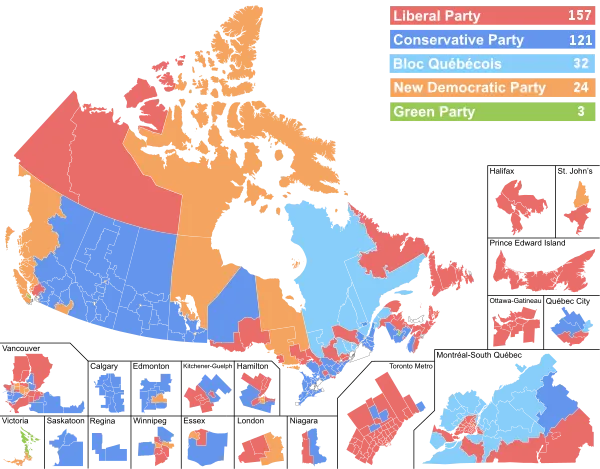
The 2021 and 2025 federal cycles both produced evidence of this shift. Several ridings in the 905 belt and Metro Vancouver's suburban municipalities that had returned conservative members for consecutive parliaments swung meaningfully toward progressive candidates, with housing cited consistently in post-election analysis as a primary driver of vote switching.
Climate Anxiety Reaches the Driveway
It would be tempting to dismiss climate change as a concern confined to urban progressives — a preoccupation of downtown dwellers who cycle to work and compost with conviction. The polling data tells a more complicated story.
Suburban Canadians are not indifferent to climate change. They are, however, acutely sensitive to how climate policy is framed and what it costs them directly. The carbon price debate has been particularly revealing in this regard. Conservative messaging that centred the cost of the carbon levy on suburban commuters who depend on their vehicles found genuine traction — not because suburban voters reject climate science, but because they experience the costs of policy more viscerally than the benefits.
Progressive campaigns that have succeeded in suburban ridings have learned to meet voters where they are. Rather than leading with abstract emissions targets, they emphasise the tangible: the flooding that damaged basements in Mississauga, the wildfire smoke that settled over Surrey, the extreme heat events that killed vulnerable residents in Calgary's newer subdivisions. Climate, framed through the lens of community safety and infrastructure investment, resonates in the suburbs in ways that the same message framed through the lens of global responsibility often does not.
Case Studies in Conversion: Ridings That Showed the Way
The 2021 federal election produced a handful of suburban seat flips that deserve sustained attention from progressive strategists. In Peel Region, a riding that had been held by a Conservative member for three consecutive parliaments shifted to a progressive candidate on the strength of a ground campaign that prioritised door-to-door canvassing in high-density residential towers — a voter pool that had historically been under-mobilised. The campaign's internal data showed that turnout among apartment-dwelling renters increased by nearly twelve percentage points compared to the previous cycle.
In British Columbia's Lower Mainland, a suburban riding that had resisted provincial NDP advances for years finally moved in the progressive column following a targeted persuasion effort that focused on South Asian community networks, small business owners concerned about climate-related disruptions to supply chains, and parents of school-age children anxious about air quality and extreme weather.
What these campaigns share is instructive: they did not wait for demographic change to do the work for them. They organised into it, treating the suburb not as a hostile environment to be survived but as a persuadable landscape to be cultivated.
What This Means for the Next Federal Election
The next federal election will, in all likelihood, be decided not in the safe seats of downtown Toronto or rural Alberta, but in the commuter corridors that stretch between them. Ridings like Brampton East, Coquitlam–Port Coquitlam, and Calgary Skyview represent the genuine frontier of Canadian electoral politics — places where progressive candidates, with the right resources and the right message, can close the gap and, in several cases, win outright.
For Red to Blue CA and the broader progressive movement, the strategic implication is clear: suburban organising must become a first-tier priority, not an afterthought once urban strongholds are secured. That means investing in local infrastructure, cultivating community relationships that predate the writ period, and developing policy communication that speaks to the specific texture of suburban life.
The suburbs are not waiting to be converted. In many respects, they are already in motion. The question is whether progressive campaigns will be organised and present enough to meet them.