Between the Stacks and the Ballot Box: How Trusted Community Spaces Are Becoming Progressive Organizing Ground

The campaign office has always been a particular kind of place. Folding tables, clipboards, a coffee maker working beyond its intended lifespan. It signals commitment and energy. It also signals, unmistakably, that you are about to be asked for something political — and in a riding where the Conservative incumbent has held the seat for a decade, that signal is enough to make a persuadable voter cross the street.
This is the problem that a new generation of progressive organizers is solving. Not by abandoning the campaign infrastructure that makes electoral work possible, but by moving the first conversation somewhere else entirely.
The Trust Problem in Conservative Ridings
In communities where progressive politics has historically been a minority position, the campaign office carries baggage. It is associated, fairly or not, with outsiders — with urban strategists who parachute in during election season, speak in the language of policy platforms, and leave when the votes are counted. Residents in these communities have learned, through repeated experience, to be wary of political enthusiasm that doesn't outlast an election cycle.
This wariness is not irrational. It is a reasonable response to a pattern of engagement that prioritizes vote extraction over genuine relationship-building. And it is precisely what makes traditional canvassing approaches — door-knocking scripts, lit drops, phone banks — less effective in these ridings than the raw numbers might suggest.
The organizers who are changing this equation have grasped something fundamental: trust is not built by asking for it. It is built by showing up in spaces where trust already exists, and behaving in ways that honour that environment.
The Library as Political Infrastructure
Across Canada, public libraries have maintained an extraordinary level of community trust through decades of political turbulence. They are spaces where people of all backgrounds come without transactional expectation — to borrow, to learn, to sit quietly, to attend a free program. The library card is, in a very real sense, a symbol of civic belonging that transcends partisan identity.
Progressive organizers in several ridings — from the Okanagan to Cape Breton — have begun partnering with library systems to host civic engagement programming that is explicitly non-partisan in framing but unmistakably substantive in content. A panel on housing policy. A workshop on understanding your MP's voting record. A discussion series on Indigenous land rights framed around local history.
These events do not ask attendees to vote progressive. They ask attendees to think — and they provide the information that makes thinking more informed. The organizers who facilitate these sessions are present not as partisans but as community members. The conversation that follows, often over coffee after the formal program ends, is where the real work happens.
"The library was the only place where someone who'd voted Conservative their whole life would sit next to someone who'd never voted Conservative and actually listen to each other," said one organizer working in a semi-rural Ontario riding. "You can't manufacture that. You have to find where it already exists."
Farmers Markets and the Politics of Presence
The Saturday morning farmers market occupies a particular place in Canadian community life. It is a space of local pride, of face-to-face commerce, of seasonal ritual. It is also, in many communities, one of the few remaining venues where people from genuinely different political backgrounds share physical space without the mediation of social media algorithms.
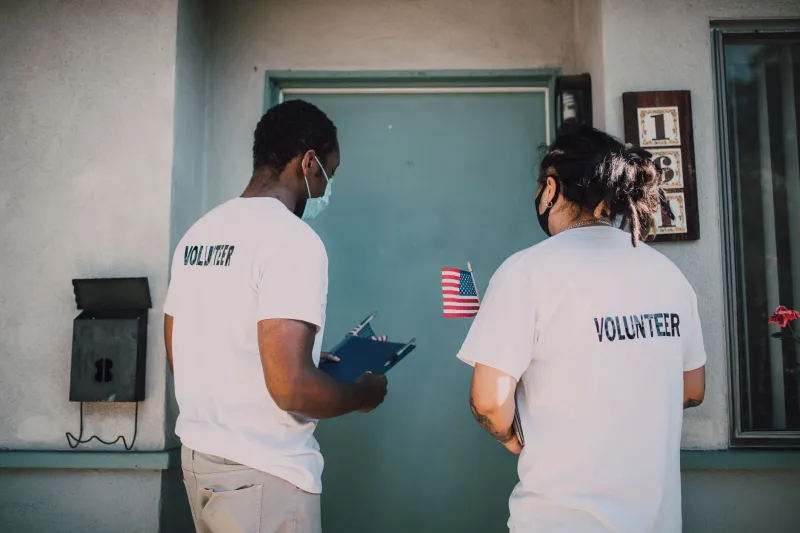
Progressive organizers have begun showing up at farmers markets — not with clipboards and candidate literature, but with presence. A table offering information on federal agricultural supports. A conversation about rural broadband infrastructure. A simple question: what's the biggest challenge your family is facing right now?
The discipline required is considerable. The temptation to pivot immediately to electoral messaging is strong, and it must be resisted. The farmers market conversation is about listening, about demonstrating that progressive politics is not an urban import but a framework that can speak to the realities of rural and small-town life.
Over time — and this is a long-game strategy — these repeated presences build something that no amount of advertising can purchase: the sense that progressive organizers are part of the community, not visitors to it.
Places of Worship and the Ethics of Engagement
Engaging with faith communities requires a level of care and cultural competence that not every organizing team possesses. But for those who approach it with genuine respect, the potential for meaningful connection is significant.
In many Conservative-leaning ridings, faith communities — whether evangelical Christian, Catholic, Sikh, or Muslim — hold considerable social authority. They are spaces where values are discussed explicitly, where community obligations are taken seriously, and where the gap between political rhetoric and lived experience is often felt most acutely.
Progressive organizers who have built relationships with faith community leaders — not to recruit them as partisan actors, but to understand their communities' concerns and find genuine alignment — report that the resulting conversations are among the most substantive they have. The common ground on issues like affordable housing, care for the elderly, and obligations to future generations is often broader than either side anticipates.
The key, organizers emphasize, is authenticity. Faith communities can identify transactional engagement immediately, and the damage to trust from a clumsy approach can be lasting. The organizers who succeed in these spaces are those who enter as learners and remain as ongoing participants, not those who arrive with a messaging agenda.
Community Centres and the Long Conversation
Perhaps the most versatile venue in the community organizing toolkit is the community centre — a space associated with hockey registrations, seniors' programming, youth drop-ins, and neighbourhood association meetings. It is, by design, a space that belongs to everyone.
Progressive organizers have found community centres particularly effective for what might be called the long conversation: a series of engagements over months or years that build familiarity, establish credibility, and create the conditions for genuine political persuasion. A volunteer who coaches a youth soccer team at the community centre for two seasons before an election is not a stranger when the campaign begins. They are a neighbour.
This is the logic that underpins the most effective community-space organizing: the goal is not to have a political conversation. The goal is to become the kind of person with whom a political conversation is possible.
The Strategic Implication
For progressive campaigns operating in Conservative-held ridings, the community-space model represents a meaningful departure from conventional electoral strategy. It requires more time, more patience, and more genuine community investment than a traditional canvassing operation. It does not lend itself to the metrics that campaign managers typically track.
But in ridings where traditional outreach has plateaued — where door-knocking scripts and digital advertising are not moving the numbers — it offers something that conventional approaches cannot: the possibility of trust. And in Canadian electoral politics, trust, once established, is extraordinarily durable.
The library card, it turns out, is more than a borrowing privilege. In the right hands, it is a key.