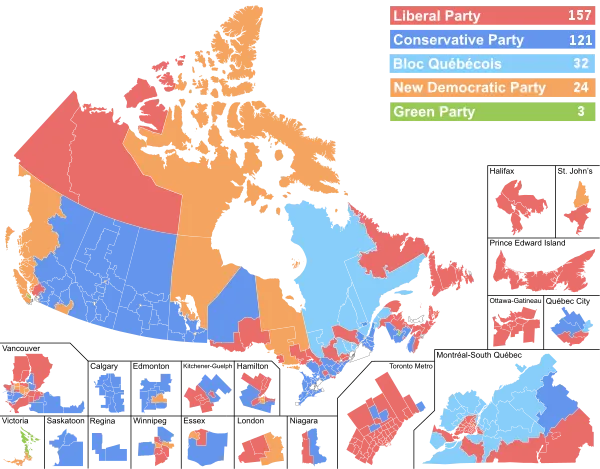
Quiet Flips: The Under-the-Radar Ridings Poised to Reshape Canada's Political Map in 2025
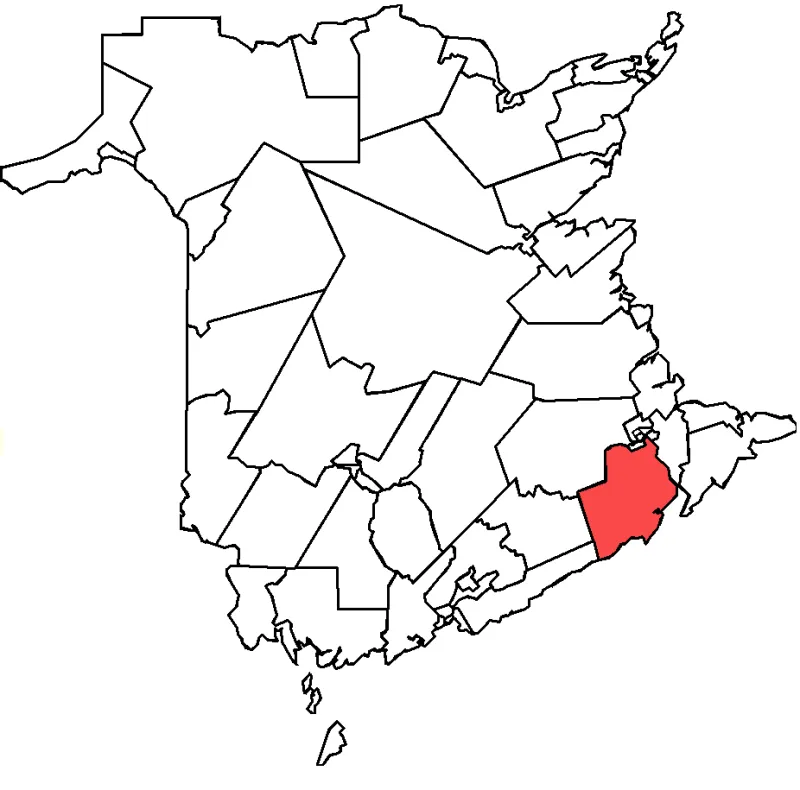
Photo: Bkissin (talk) (Uploads), Public domain, via Wikimedia Commons
Every election cycle, the same names dominate the conversation. Pundits and party war rooms fixate on a familiar roster of ridings — the ones that have appeared on every swing-seat list since the early 2000s. Meanwhile, a quieter transformation is unfolding in communities that rarely make the evening broadcast. Demographic shifts, new arrivals, and a generation of voters aging into civic participation have been steadily rewriting the electoral math in places most strategists have not yet noticed.
At Red to Blue CA, we have spent the past several months cross-referencing 2021 census data with Statistics Canada's recent migration flow reports, municipal voting records, and on-the-ground conversations with local organisers. What emerged is a picture of eight Canadian ridings that progressive campaigns would be wise to treat as genuine targets in 2025 — not long shots, but genuinely winnable seats that are being systematically under-resourced.
Why the Obvious Battlegrounds Aren't the Only Battlegrounds
Conventional electoral strategy tends to concentrate resources where the margin was narrowest in the previous election. That logic is not wrong, but it is incomplete. A riding that was decided by two thousand votes four years ago may have calcified into something far less persuadable, while a constituency that once looked safely conservative has been quietly transformed by an influx of younger renters, new Canadians, and workers priced out of major urban centres.
"The data lags behind reality," says one demographic analyst who works with municipal governments in Ontario and asked not to be named. "By the time a riding shows up on a national party's target list, the window may already be closing. The smart money looks at where the population is going, not where it has been."
That forward-looking lens is precisely what distinguishes the ridings on our list.
Eight Ridings Worth Watching
Peterborough–Kawartha (Ontario): Long considered a reliable conservative anchor in central Ontario, this riding has absorbed a significant number of Toronto-area families seeking affordable housing over the past five years. Younger homeowners and renters now constitute a meaningful share of the electorate, and local organisers report rising concern about healthcare access, transit infrastructure, and affordability — issues that map naturally onto a progressive platform.
Kelowna–Lake Country (British Columbia): The Okanagan has historically been among the most conservative regions in the country, but Kelowna's rapid growth has introduced a more diverse and younger population. International students at UBC Okanagan, tech-sector workers, and service-industry employees represent an emerging coalition that has never been seriously cultivated by progressive campaigns.
Red Deer–Mountain View (Alberta): No, this is not a typo. The riding remains a conservative stronghold by most measures, but a network of local organisers has been quietly building relationships with agricultural workers, newcomers employed in the energy transition sector, and young families frustrated by provincial cuts to public services. The margin will not flip overnight, but depressing the conservative vote share even modestly here has downstream effects on provincial dynamics.
Simcoe North (Ontario): Situated in cottage country north of Barrie, this riding has seen its permanent population swell as remote work made year-round residency viable for professionals who once commuted to Toronto. The new permanent residents skew younger and more educated than the traditional base, and local issues — particularly the health of Georgian Bay and the chronic underfunding of rural healthcare — are generating genuine political energy.
Moncton–Riverview–Dieppe (New Brunswick): Atlantic Canada's political landscape is more fluid than its reputation suggests. This bilingual riding, anchored by New Brunswick's largest city, has a growing Francophone population that is increasingly dissatisfied with federal conservative positions on language rights and social services. Progressive campaigns that invest in authentic French-language outreach here could find an unusually receptive audience.
Lethbridge (Alberta): Another Alberta entry that may raise eyebrows, but the numbers tell an interesting story. Lethbridge has one of the youngest median populations in the province, a substantial university presence, and a significant Indigenous population whose electoral participation has been growing steadily. The riding will not be easy, but it is far more contestable than its provincial reputation implies.
Chilliwack–Hope (British Columbia): This Fraser Valley riding has seen sustained in-migration from Metro Vancouver, driven almost entirely by housing costs. Many of these new residents carry voting histories and political sensibilities formed in more progressive urban environments. They have not stopped caring about affordability, transit, and climate policy simply because they moved east along the Trans-Canada.
Sault Ste. Marie (Ontario): A former NDP stronghold that drifted rightward over the past decade, Sault Ste. Marie is showing early signs of a possible re-alignment. Labour tensions in the manufacturing sector, combined with anxiety about the steel industry's long-term viability and the federal government's role in supporting it, are creating openings for a campaign that speaks credibly to working-class economic concerns.
What These Ridings Have in Common
Looking across this list, several patterns emerge. Nearly all of these ridings have experienced above-average population growth in the past five years, much of it driven by affordability migration from major urban centres or by immigration. In most cases, the incoming population skews younger and more diverse than the existing electorate. And in virtually every case, local organisers on the ground report that the riding is not being treated as a serious target by provincial or federal progressive campaigns.
That last point is perhaps the most actionable. These communities are not asking for a cavalry charge. They are asking for the basic infrastructure of a serious campaign: a local office, a canvassing operation, a candidate who shows up before the writ is dropped, and messaging that reflects the actual concerns of people who live there.
The Strategic Case for Expanding the Map
Progressive parties that fixate exclusively on their existing coalition risk winning battles while losing the war. Expanding the electoral map — even into ridings that seem unlikely at first glance — serves multiple purposes. It forces conservative campaigns to defend territory they consider safe, stretching their resources. It builds local organisational capacity that pays dividends across multiple election cycles. And it sends a signal to communities that have historically been written off that they matter.
"Every riding we treat as unwinnable is a riding where we've decided not to organise," notes one veteran campaign manager who has worked in both British Columbia and Ontario. "That's not a strategic decision. That's a habit."
Breaking that habit — and directing resources toward the ridings on this list — may well prove to be one of the defining strategic choices of the 2025 campaign. The question is whether anyone is paying attention closely enough to act on it.
Red to Blue CA will continue tracking these ridings throughout the 2025 campaign cycle. Organisers working in any of these communities are encouraged to connect with our network through the site's contact page.